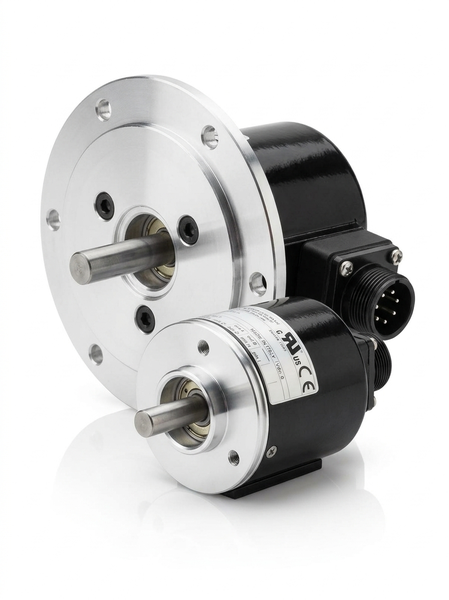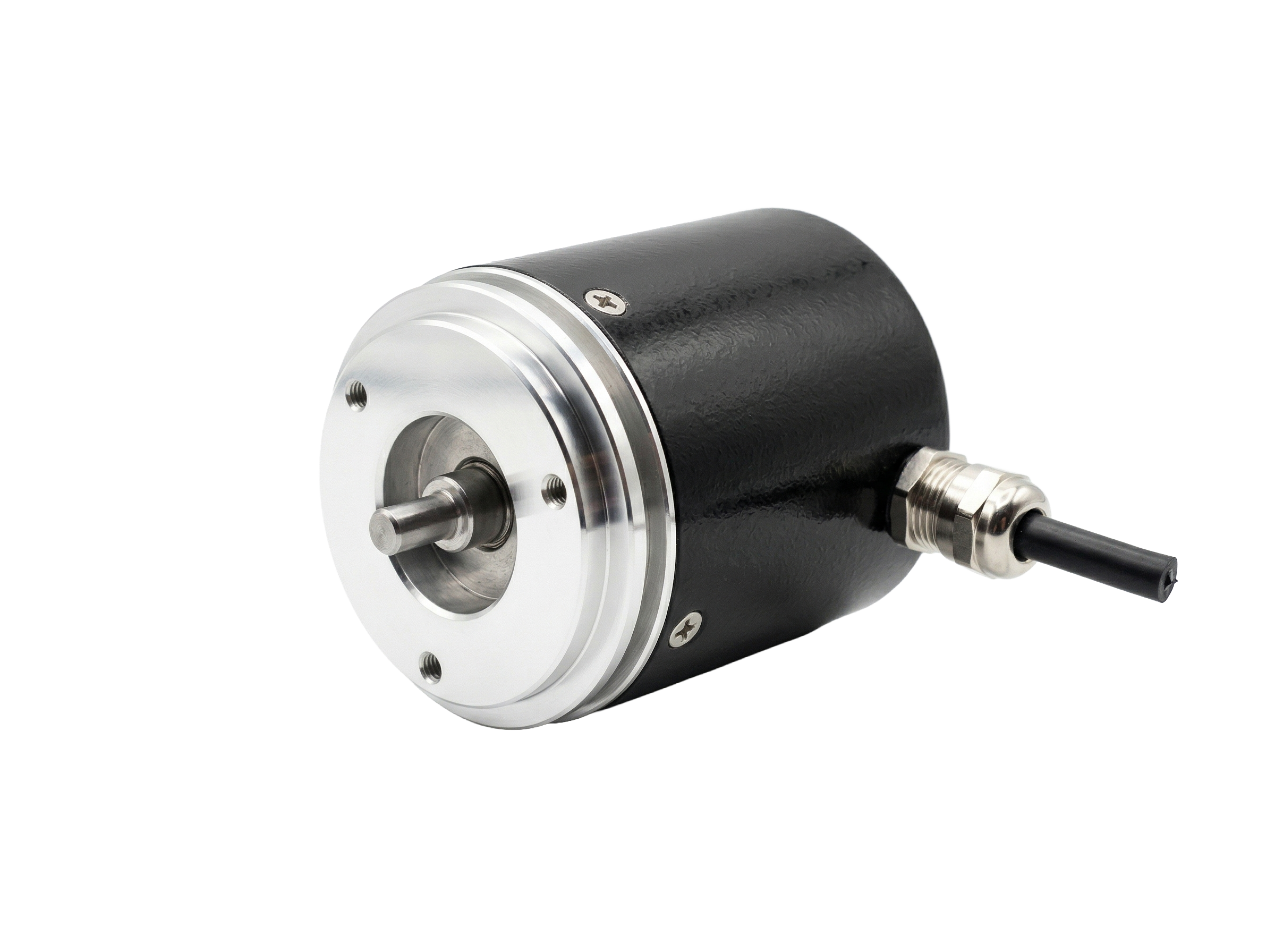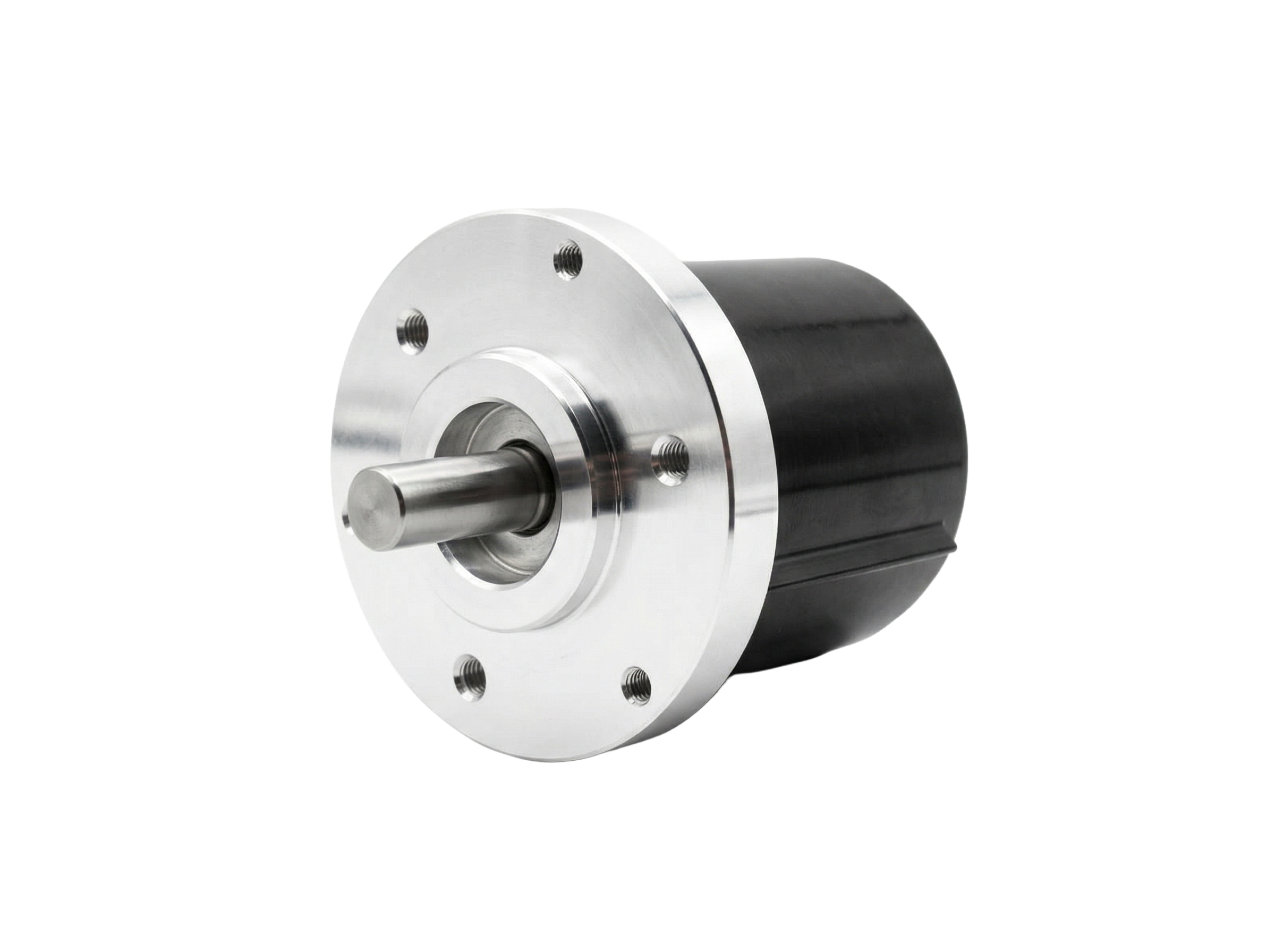
Line Driver RS-422: Differential Transmission for Encoders
The Line Driver output (RS-422/TTL) is the standard choice for incremental encoders in industrial environments with electromagnetic interference. It uses differential signals to ensure noise immunity over long distances.
Working Principle
Each encoder channel (A, B, Z) is transmitted on TWO wires with complementary signals:
- Line A: original signal (0V / 5V)
- Line /A: inverted signal (5V / 0V)
The differential receiver at the PLC calculates the DIFFERENCE between the two lines. Since electromagnetic noise affects both wires equally (common mode), subtraction eliminates it.
Electrical Specifications
- Supply voltage: 5 Vdc (TTL) or 5-30 Vdc (with internal regulator)
- Logic levels: differential ±5V (RS-422 standard)
- Output impedance: 100 Ω
- Maximum frequency: up to 500 kHz
- Maximum distance: 200 m (at 100 kHz), 50 m (at 500 kHz)
- Recommended cable: shielded twisted pair (STP) with 100-120 Ω impedance
Wiring Diagram
An encoder with 3 channels (A, B, Z) in Line Driver configuration requires:
- 2 wires for channel A (A and /A)
- 2 wires for channel B (B and /B)
- 2 wires for channel Z (Z and /Z)
- 1 power wire (+5V or +24V)
- 1 ground wire (GND)
- Total: 8 wires (+ shield)
Line Termination
For frequencies > 100 kHz or distances > 50 m, a termination resistor (120 Ω) at the receiver input is needed to prevent cable reflections.
When to Use Line Driver
- Encoder-PLC distances > 30 m
- Environments with motors, inverters, welders (strong EMC interference)
- Frequencies > 100 kHz (high speed × high resolution)
- Counters and PLCs with differential inputs (Siemens, Beckhoff, Allen-Bradley)
Common Mistakes
- Not connecting inverted lines (/A, /B, /Z) — loses noise immunity
- Using unshielded cable — noise induced by nearby power cables
- Exceeding PLC input maximum frequency — incorrect counting