Incremental vs Absolute Encoder: Selection Guide
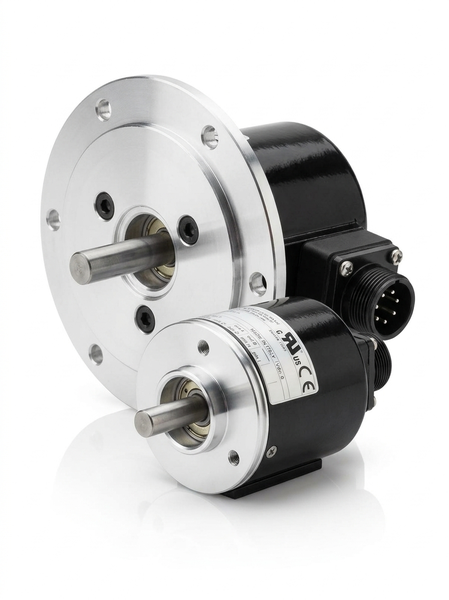
Choosing between incremental and absolute encoders is one of the fundamental decisions in automation system design. Both types measure rotation, but they do it in radically different ways.
Incremental Encoder
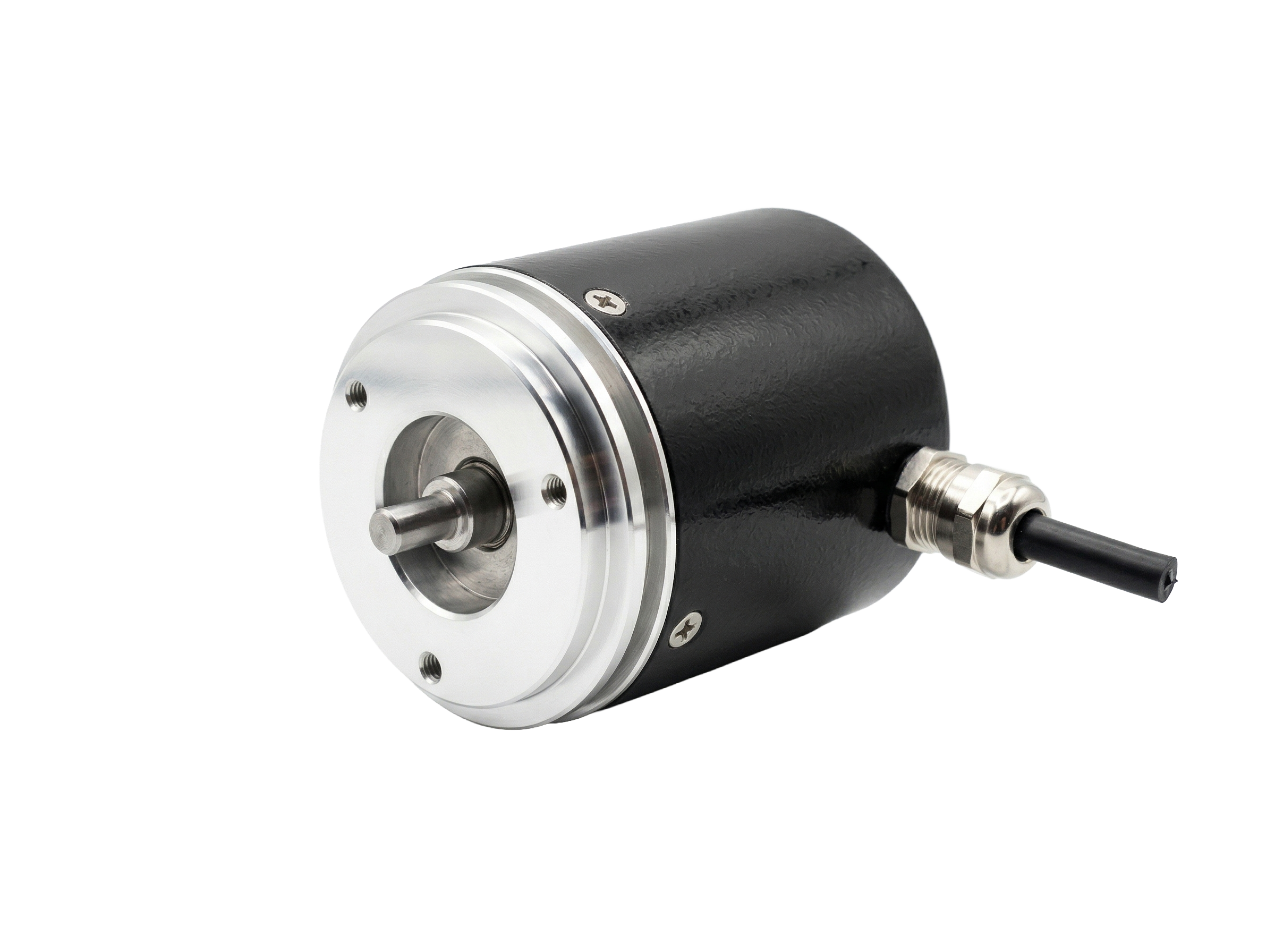
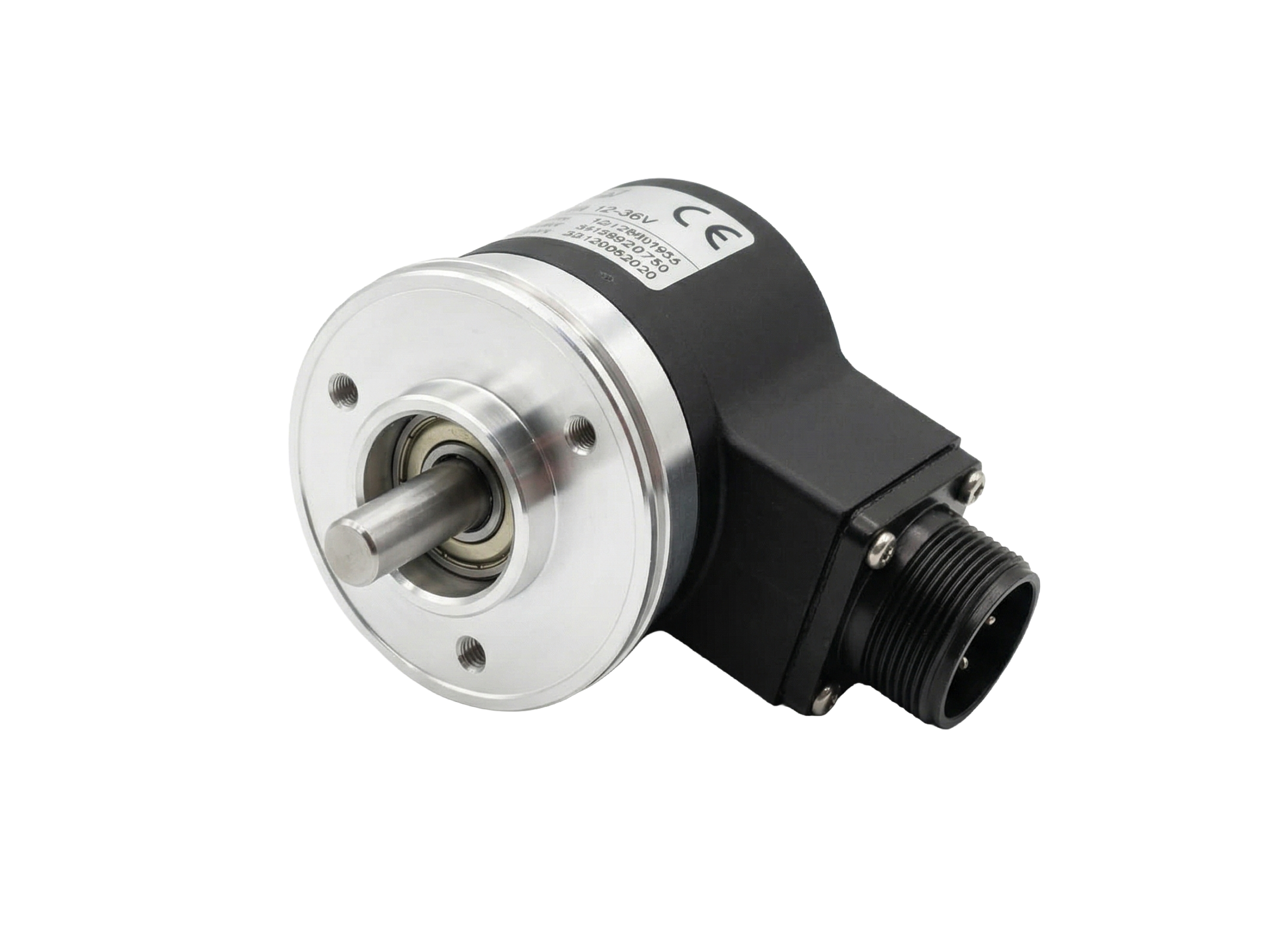
The incremental encoder generates electrical pulses proportional to shaft rotation. Each pulse corresponds to an angular increment defined by the resolution (for example, 1024 pulses per revolution means a 0.35° increment). The typical signal consists of two quadrature channels (A and B) with a 90° phase shift, which determine the direction of rotation, plus an index channel (Z) providing one pulse per revolution as a reference.
Advantages: low cost, high response frequency (up to 300 kHz), simple wiring, universal compatibility with PLCs and drives.
Limitations: position is relative — it is lost after power-off. A homing cycle (return to zero) is required at every system start-up.
Absolute Encoder
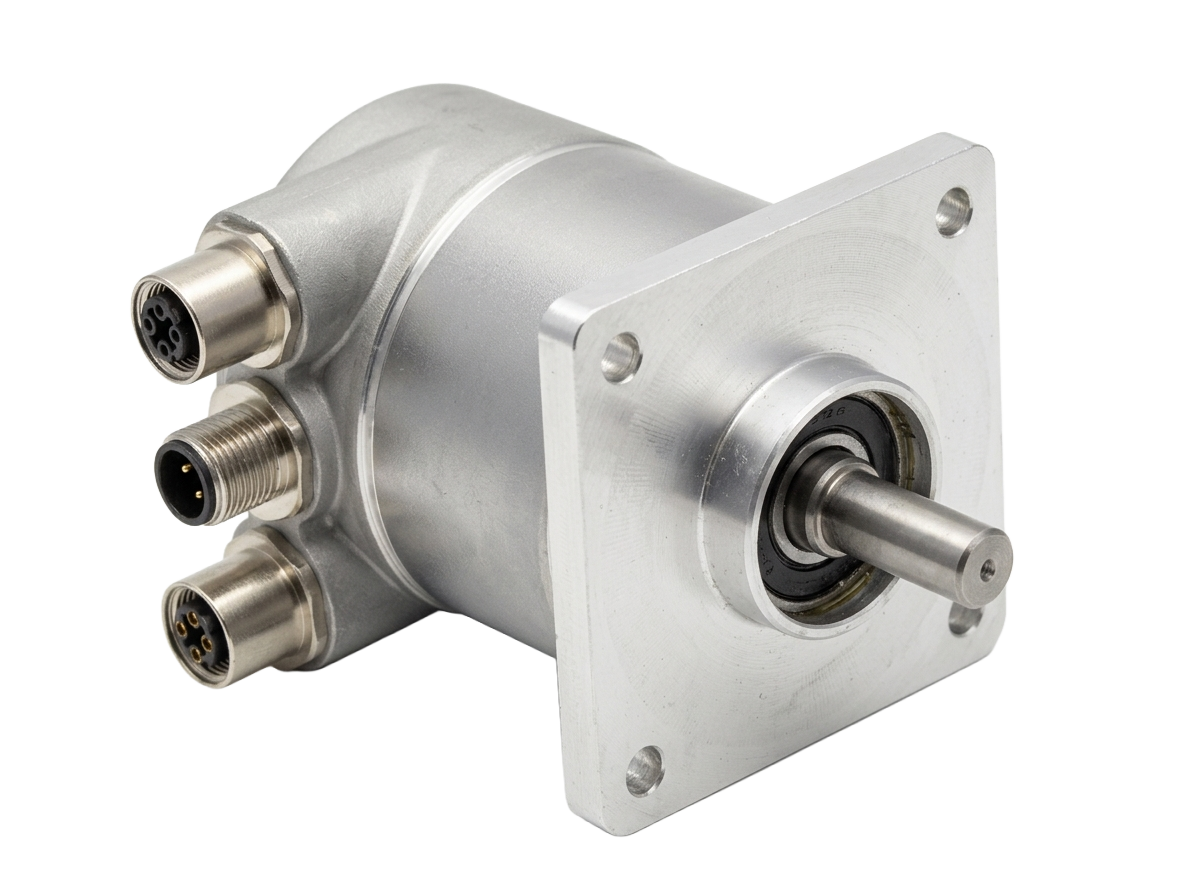
The absolute encoder assigns a unique binary code to each angular position. Even after a power interruption, the encoder "knows" exactly where it is without homing. Single-turn models provide position within one revolution (typically 12-17 bits), while multi-turn models also track the number of complete revolutions (up to 16,384 turns with 14-bit multi-turn).
Advantages: immediate absolute position, no homing required, functional safety (SIL), ideal for vertical axes.
Limitations: higher cost, more complex communication protocols (SSI, EtherCAT, PROFINET).
When to Choose One or the Other
- Speed control and counting: incremental (e.g., conveyors, winders)
- Precise positioning after power-off: absolute (e.g., elevators, robots, cranes)
- Environments with frequent power interruptions: absolute multi-turn
- Limited budget, simple application: incremental
Practical Rule
If the system needs to know its position immediately after power-on, you need an absolute encoder. If it can afford a homing cycle, incremental is the more economical choice.